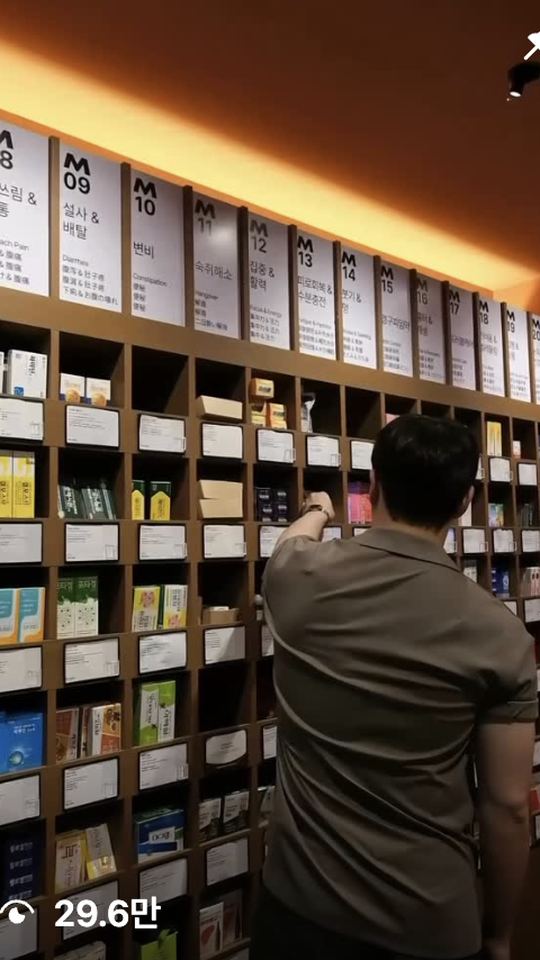
K-beauty marketing to foreign customers starts with finding the scene a foreign viewer saves and comes back to. Brands preparing to go overseas tend to put their first effort into translating ad copy into more languages. But what makes a foreign viewer stop is rarely the quality of a translation. It is one scene that says "this is my problem". And that scene can be tested in Seoul first, on the foreign visitors who are already here.
Over 90% of the Trend Seoul audience is non-Korean. On that channel we made five reels for four K-beauty pharmacies, and we produce two channels every month for a K-beauty information platform aimed at Traditional Chinese speakers. This is what we learnt along the way.
Same category, a different opening every time
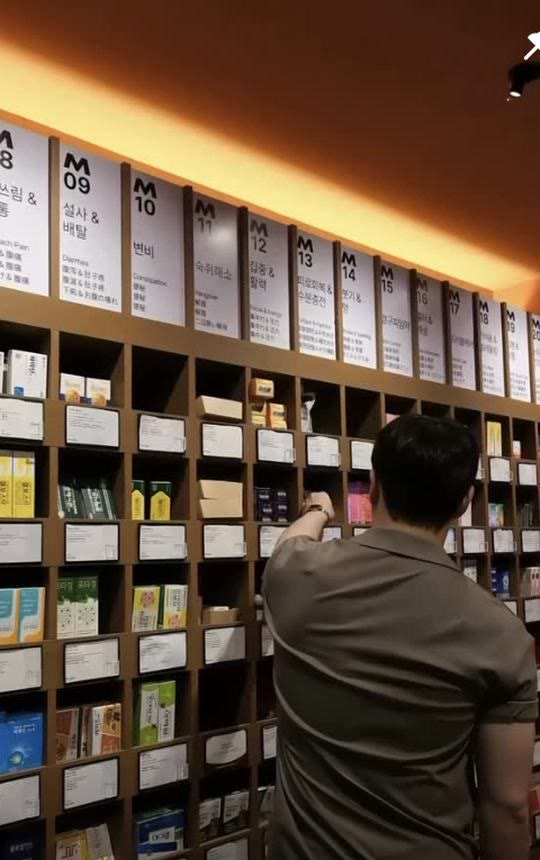
For foreign visitors, buying K-beauty means the big chain stores. Neighbourhood pharmacies offer better advice and better products and still never make the shortlist. A reel that simply says "best K-beauty pharmacy" was never going to change that.
So each of the four pharmacies got its own hook:
- one customer's skin concern, solved
- a guide for people who get lost inside a Korean pharmacy
- the feel of the space itself
- the place K-beauty regulars actually go
Four pharmacies in the same category, four different stories. The same applies to a brand. If you have several product lines, decide for each one whose problem it solves, and what that problem is, before you write a single line of copy.
Should you measure K-beauty reels by views or by saves?
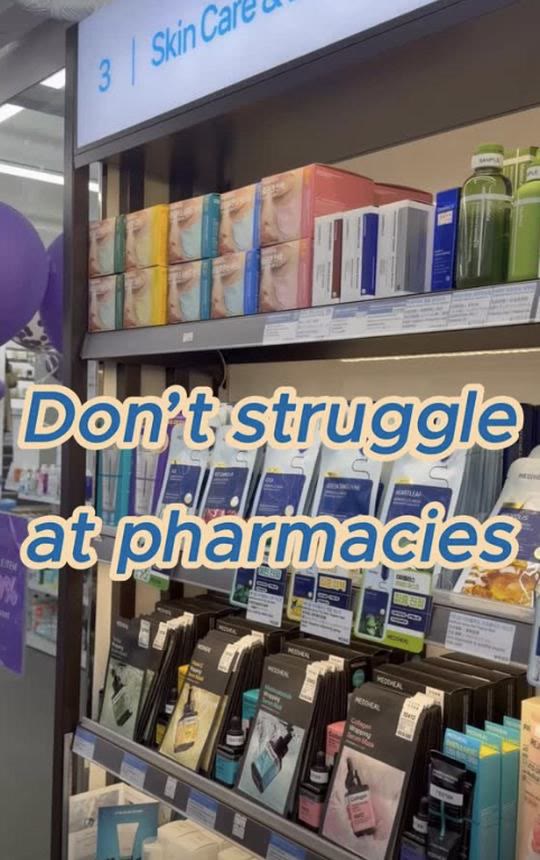
For K-beauty reels, saves are a closer signal to an actual purchase than views. A foreign viewer who watches a beauty reel rarely buys on the spot. They add it to their itinerary, send it to a friend, and pull it up again in the shop.
The OWM Seongsu reel has been played 349,636 times, and Instagram insights show 22,252 saves. The pharmacy adopted it as its official brand film. Across all five reels the total is 459,601 plays (public play counts, 6 October 2026):
- OWM Seongsu: 349,636
- OWM Sinsa: 55,488
- Ready Young: 24,578
- Beauty Lab: 17,778
- Gangnam Square: 12,121
After the pharmacy reels' results, two of the pharmacies came back to us first. The full breakdown is in the K-beauty pharmacies case.
How should you show K-beauty products to foreign viewers?
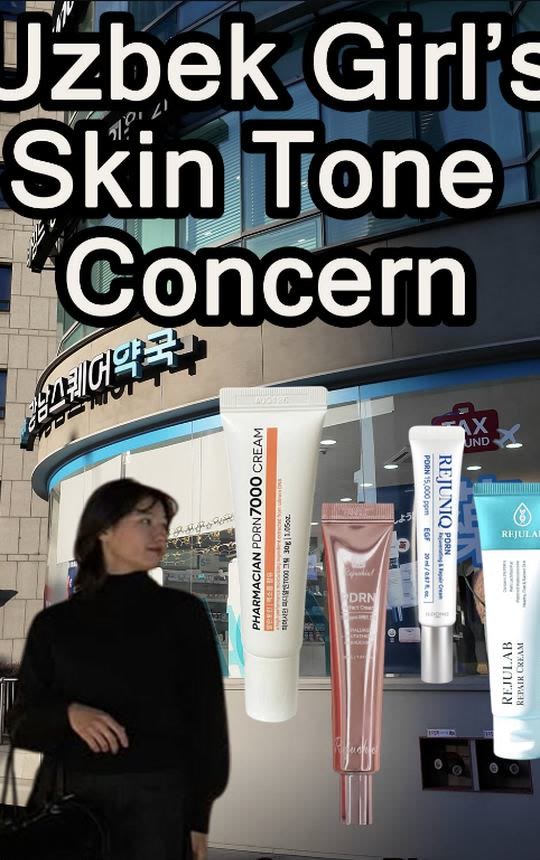
Show a K-beauty product through one person's problem rather than a list of benefits. List a product's benefits and a foreign viewer hears the same sentence they have seen in every other market's ads. The Gangnam Square reel opens its title on one person's skin-tone concern, and shows products against that concern. Viewers remember what someone like them chose far longer than they remember an ingredient list.
If you are preparing to launch overseas, opening on a person's problem is the part you can test in Seoul before you spend abroad. Find out which concern, put first, makes foreign viewers save the reel. Then hand that structure to creators in each market as their brief.
Should a K-beauty brand run a separate channel for each language?
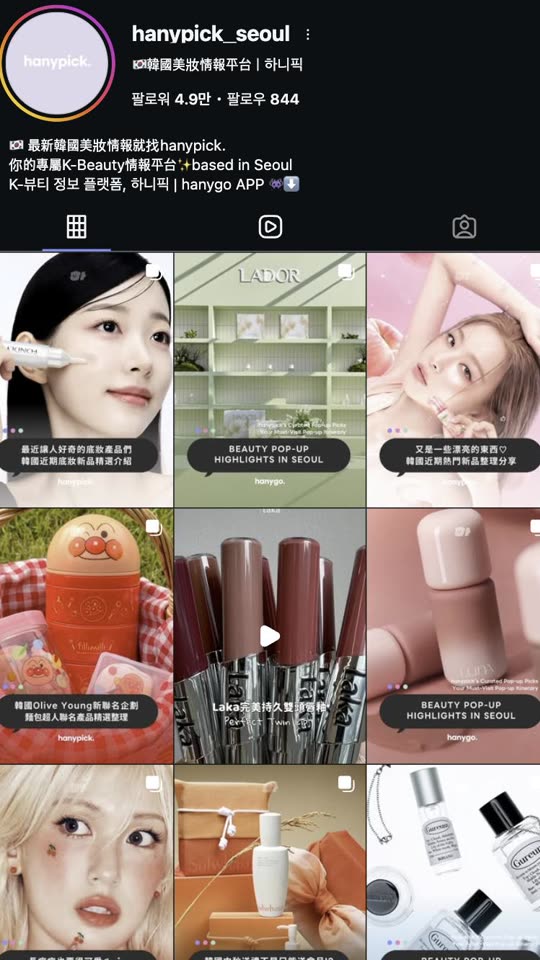
Yes, split K-beauty channels by language group. hanypick is a K-beauty information platform for Traditional Chinese speakers, with 49K followers. For hanypick we plan and produce ten pieces a month across two channels: the Seoul channel for Traditional Chinese viewers and the global channel for English speakers. The monthly mix is three Seoul reels, three global reels and four global carousels.
| hanypick Seoul channel | hanypick global channel | |
|---|---|---|
| Audience | Traditional Chinese speakers | English speakers |
| Monthly mix | 3 reels | 3 reels and 4 carousels |
| New launches and pop-ups | A separate piece for Traditional Chinese viewers | A separate piece for English speakers |
Mix two languages on one channel and it fits neither audience. Even the same topic, a new launch or a pop-up, becomes a separate piece for each language group. Performance by format is shared at the end of each month, and from the second month the mix of formats and volumes is adjusted to what is working. See how it runs in the hanypick case.
When you expand to Japan or English-speaking markets, the fastest route is local creators making it in their own voice. The Trend Seoul creator pool is 185 English-speaking and 1,319 Japanese-speaking creators.
Checklist: K-beauty marketing to foreign customers
- Have you written, for each product, whose problem it solves in one line?
- Does your first scene open on that product's own reason, not on the category?
- Do you track saves and shares alongside views?
- Have you split channels or pieces by language group?
- Do you have a plan to turn a structure proven in Seoul into a brief for creators abroad?
Trend Seoul tests on its own channel first, then takes the structures that worked to creators in each language group, published in each market's own language. The process is set out on our global influencer marketing page, and how we put Seoul venues in front of foreign visitors is on the marketing to foreign tourists page.
Frequently asked questions
How do you market a Korean pharmacy to foreign tourists?
Give each pharmacy its own hook instead of introducing the category. Trend Seoul built a different story for each of four K-beauty pharmacies: one customer's skin concern, a guide for people who get lost inside a Korean pharmacy, the feel of the space, and the place K-beauty regulars actually go. Those five reels total 459,601 plays (public play counts, 6 October 2026).
Can you test K-beauty content in Korea before launching overseas?
Yes, you can find out in Seoul which concern, put first, makes foreign viewers save a reel. Over 90% of the Trend Seoul audience is non-Korean, so the reaction of foreign visitors already in Korea shows up first. The structure that works then becomes the brief for creators in each market.
Is translating ad copy enough for K-beauty marketing abroad?
Rarely. What makes a foreign viewer stop is one scene that says "this is my problem", not the quality of a translation. Trend Seoul tests that scene in Seoul first, on the foreign visitors who are already here.
Do I need local creators for K-beauty marketing in Japan or the US and UK?
Local creators making content in their own voice are the fastest route into Japan or English-speaking markets. The Trend Seoul creator pool is 185 English-speaking and 1,319 Japanese-speaking creators. Trend Seoul takes structures that worked on its own channel to creators in each language group, published in each market's own language.